

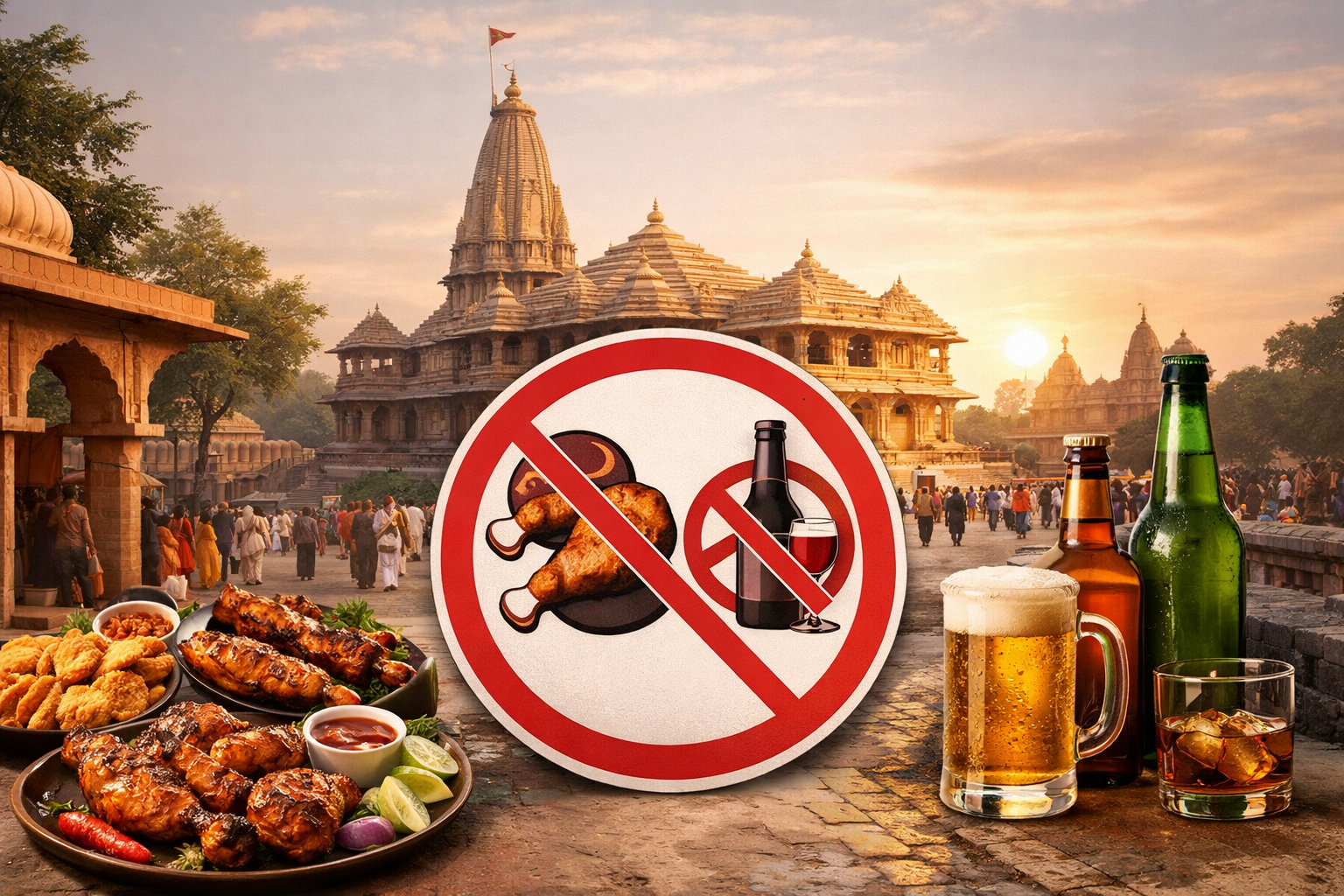
Ayodhya, one of India’s most sacred cities, has taken a major step to protect its religious and spiritual environment. The Ayodhya administration has officially announced a strict ban on the sale and delivery of non-vegetarian food and liquor within a 15-kilometre radius of the Ram Janmabhoomi Temple. This rule came into effect on January 9, 2026.
The decision aims to maintain the purity and spiritual atmosphere of Ayodhya Dham, especially as the city continues to attract millions of devotees from India and across the world.
Why Did Ayodhya Introduce the Non-Veg Ban?
The ban was introduced after repeated complaints from pilgrims and local residents. Many devotees raised concerns about meat and alcohol being transported through sacred routes such as the Panchkosi Parikrama Path, which holds deep religious importance in Hindu tradition.
Officials stated that Ayodhya is not just a city—it is a symbol of faith and devotion. Allowing non-vegetarian food and liquor near the Ram Mandir was seen as disturbing the spiritual sentiments of devotees.
Online Food Delivery Platforms Also Restricted
One of the most important aspects of this order is that it applies not only to physical shops and restaurants but also to online food delivery platforms like Zomato and Swiggy.
The 15-kilometre area around the temple has now been declared a “no-delivery zone” for non-vegetarian food and alcohol. This ensures that such items are not transported through sacred religious routes, even indirectly.
Strict Action Against Violators
Assistant Food Commissioner Manik Chandra Singh confirmed that:
-
Hotels
-
Homestays
-
Restaurants
-
Local food vendors
Any violation will lead to immediate legal action, including:
-
Cancellation of food licenses
-
Penalties under food safety laws
-
Closure of establishments
Officials made it clear that no exceptions will be allowed.
Ram Path and Panchkosi Parikrama Under Special Focus
Earlier, non-vegetarian food sales were already restricted along the 14-kilometre Ram Path, a key route connecting important religious sites. With the new order, enforcement has become stricter, especially around the Panchkosi Parikrama route, which is walked by thousands of devotees every day.
The administration believes that this move will help preserve the peaceful, spiritual, and devotional environment of Ayodhya.
Ayodhya as India’s Spiritual Identity
As the Ram Mandir has become a major spiritual and cultural landmark, Ayodhya is rapidly developing into a global religious destination. The administration feels it is important to balance development with religious values and traditions. This decision has started discussions across India, with many people wondering if other famous temple towns may also introduce similar “pure zone” rules in the future.
The Ayodhya administration’s decision reflects its commitment to protecting the religious sanctity of Ram Mandir and Ayodhya Dham. As the city grows as a spiritual hub, such measures are seen as steps toward preserving its sacred identity.
To know more latest news updates, trending developments, and skill-based learning opportunities, stay connected with Skills4Career.
Frequently Asked Questions
What exactly is banned in Ayodhya?
The sale and delivery of non-vegetarian food and alcohol are banned within a 15-kilometre radius of the Ram Janmabhoomi Temple.
Does the ban apply to online food delivery apps?
Yes. Online platforms like Zomato and Swiggy are also restricted from delivering non-veg food or liquor in the banned zone.
When did this rule come into effect?
The rule came into effect on January 9, 2026.
What happens if someone violates the ban?
Violators may face legal action, including cancellation of licenses, fines, and closure of businesses.